Facial Symmetry & Analysis Results
Why Your Facial Features Aren't Perfectly Identical
Why Your Facial Features Aren't Perfectly Identical starts with the outer line of the face, not with one feature in the middle of it. Perfect identity between sides is uncommon.
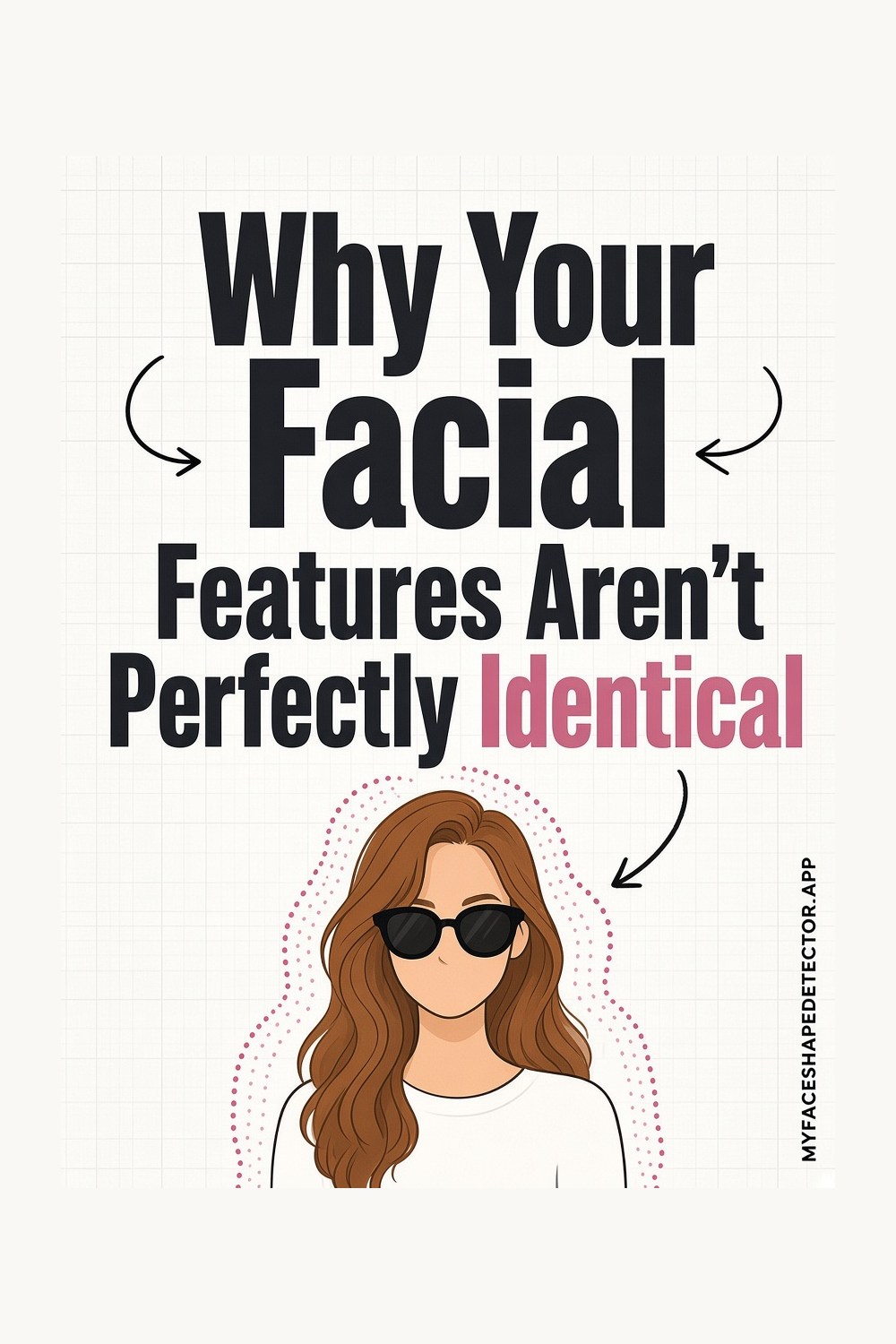
Read the result as a description of that photo. Evenness and shape are separate lines. The picture above is the pin for this guide. The same page is the link on the pins that belong with it.
Find Your Face Shape in Seconds
Not sure if your face is oval, round, square, heart, diamond, oblong, or triangle? Upload or take a clear front-facing selfie and MyFaceShape will analyze your facial proportions to help identify your face shape in seconds.
Simple face-shape analysis — not a beauty score or attractiveness rating.
Try MyFaceShape on iPhone or Android


How to read the outline
If you searched for “features aren't identical”, stay with the contour. Name the shape only after you can see where the face is long and where it is wide.
Small differences in the jaw or cheeks are a normal result, not a problem the scan discovered. Confidence is how strongly the outline matched one shape versus the others.
If two shapes were close, confidence is less decisive. It is not a rating of the face.
A percentage in this kind of analysis represents how close a match or a similarity was in the photo. It does not represent attractiveness or health.
When two names both seem possible
Compare by asking which line is longest: forehead, cheeks, or jaw. The longest is the widest feature.
The shorter ones explain the taper. Scores are limited by the photo.
Angle, distance, and light can move them. They estimate a match.
They do not certify a face. It can tell you the closest face shape, the main widths, and how the sides compare in that photo.
It cannot tell you worth, health, or a perfect category. The jawline result is the lower contour and the width between the corners.
Read it as wide, narrow, curved, or angular, then see how it fits the full shape. Cheekbone measurements mean how wide the middle of the face is compared with the forehead and jaw.
If they win, diamond is likely. Interpret the forehead by comparing it with the jaw, not by itself.
Wider than the jaw supports a heart reading when the chin also narrows. Classification means which of the seven names fit the measured outline.
It is a category, an estimate, and the closest match.
If the photo is tilted, take another one before you trust this check. Use one still photo. A chin that drops or lifts between shots will not agree with itself about the jaw.
Take the photo straight
Use one photo, taken straight on, with the camera at eye level. Hair only needs to be clear of the hairline and the jaw. A tilt, a shadow on one cheek, or a chin that is lifted will change the outline before you have even started.
Look at the forehead, the cheeks, and the jaw as three widths. Then compare the length of the face with the width. That is the whole reading.
Common questions
How do I use “Why Your Facial Features Aren't Perfectly Identical”?
Perfect identity between sides is uncommon. Use one still photo. A chin that drops or lifts between shots will not agree with itself about the jaw.
How do I use “Understanding the Limits of AI Face Scores”?
Scores are limited by the photo. If two outlines both seem close, look again at the chin and the jaw corners. That is usually where they split.
How do I use “Understanding Your Face Shape Classification”?
Classification means which of the seven names fit the measured outline. Check length against width before you compare two names. A strong jaw can still sit on a long face.
Find Your Face Shape
Take one clear, front-facing selfie and MyFaceShape helps identify whether your face is oval, round, square, heart, diamond, oblong, or triangle. Quick, simple, and focused on face shape — not beauty scores.
Try MyFaceShape on iPhone or Android