Jawline, Forehead & Cheekbones
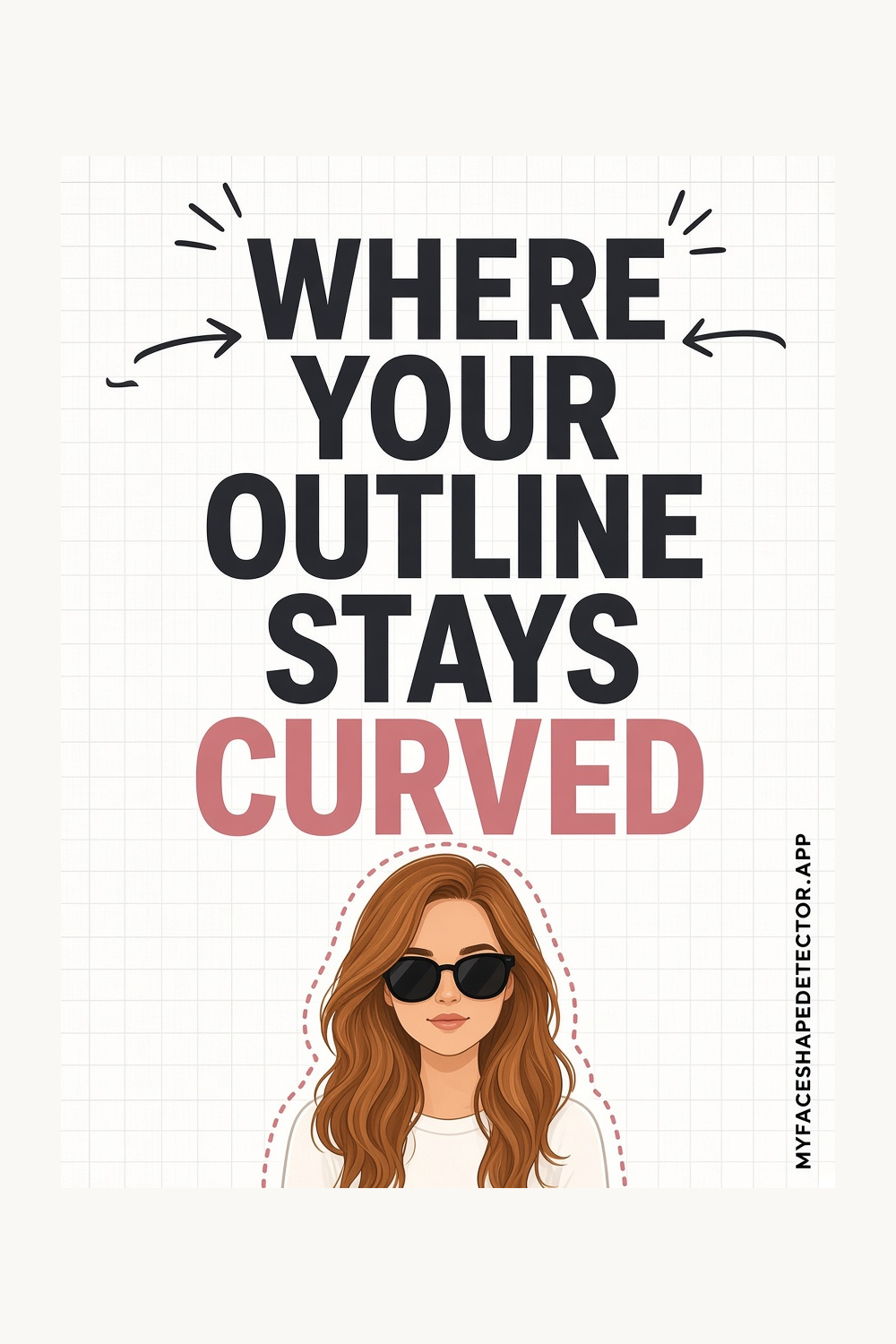
Where Your Outline Stays Curved
Where Your Outline Stays Curved starts with the outer line of the face, not with one feature in the middle of it. A curve that never turns a corner points away from square.
Forehead, cheeks, and jaw are three widths. Read them as widths, not as compliments. The picture above is the pin for this guide. The same page is the link on the pins that belong with it.
Find Your Face Shape in Seconds
Not sure if your face is oval, round, square, heart, diamond, oblong, or triangle? Upload or take a clear front-facing selfie and MyFaceShape will analyze your facial proportions to help identify your face shape in seconds.
Simple face-shape analysis — not a beauty score or attractiveness rating.
Try MyFaceShape on iPhone or Android


How to read the outline
If you searched for “outline stays curved”, stay with the contour. Name the shape only after you can see where the face is long and where it is wide.
Round and oval live in that smooth line, and length splits them. The nose and eyes sit inside the shape.
They do not move the forehead edge, the cheeks, or the jaw. Leave them out of the name.
Read the contour before you study anything inside it. The shape question is already answered by that line.
When two names both seem possible
The chin is the bottom of the outline. A narrow finish leans heart.
A wider, firmer finish leans square or triangle. Jaw corners change a soft contour into an angular one.
That single change can move a face from round toward square. A narrow chin pulls the lower outline in.
If the forehead stays wide, the name moves toward heart. A wide jaw pushes the lower outline out.
If it passes the forehead, triangle becomes more likely than oval. The order matters.
Name the shape only after the contour is clear, or the name follows a feature instead of the line. See the face as one outline instead of a set of features.
That single line is what the seven names describe. The shape is the geometry of the line around the face: where it is wide, where it narrows, and how far it drops.
If the photo is tilted, take another one before you trust this check. Use one still photo. A chin that drops or lifts between shots will not agree with itself about the jaw.
Take the photo straight
Use one photo, taken straight on, with the camera at eye level. Hair only needs to be clear of the hairline and the jaw. A tilt, a shadow on one cheek, or a chin that is lifted will change the outline before you have even started.
Look at the forehead, the cheeks, and the jaw as three widths. Then compare the length of the face with the width. That is the whole reading.
Common questions
How do I use “Where Your Outline Stays Curved”?
A curve that never turns a corner points away from square. Use one still photo. A chin that drops or lifts between shots will not agree with itself about the jaw.
How do I use “How the Jaw Corners Change the Contour”?
Jaw corners change a soft contour into an angular one. If two outlines both seem close, look again at the chin and the jaw corners. That is usually where they split.
How do I use “The Shape of the Line Around Your Face”?
The shape is the geometry of the line around the face: where it is wide, where it narrows, and how far it drops. Check length against width before you compare two names. A strong jaw can still sit on a long face.
Find Your Face Shape
Take one clear, front-facing selfie and MyFaceShape helps identify whether your face is oval, round, square, heart, diamond, oblong, or triangle. Quick, simple, and focused on face shape — not beauty scores.
Try MyFaceShape on iPhone or Android