MyFaceShape App Discovery & Tutorials
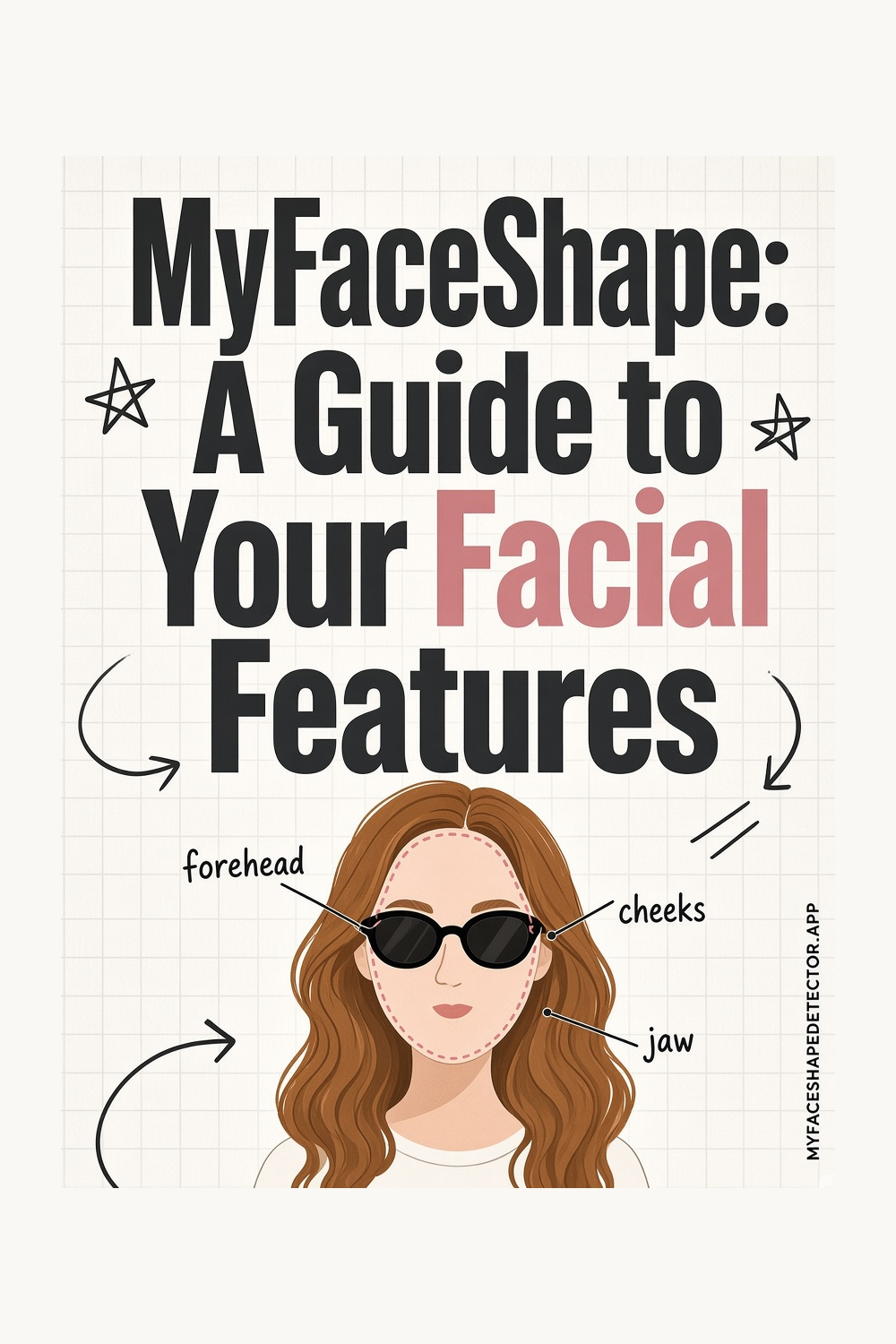
MyFaceShape: A Guide to Your Facial Features
MyFaceShape: A Guide to Your Facial Features starts with the outer line of the face, not with one feature in the middle of it. The guide's features are the forehead, cheekbones, jaw, and overall outline.
The app is a way to check the outline from a selfie. The screens are there to show the comparison, not to grade a face. The picture above is the pin for this guide. The same page is the link on the pins that belong with it.
Find Your Face Shape in Seconds
Not sure if your face is oval, round, square, heart, diamond, oblong, or triangle? Upload or take a clear front-facing selfie and MyFaceShape will analyze your facial proportions to help identify your face shape in seconds.
Simple face-shape analysis — not a beauty score or attractiveness rating.
Try MyFaceShape on iPhone or Android


How to read the outline
If you searched for “guide to facial features”, stay with the contour. Name the shape only after you can see where the face is long and where it is wide.
Those are the ones that explain the shape. Explore confidence as match strength.
Higher means one shape fit more clearly. Lower means another shape was close.
View symmetry on its own center line, after you have read the shape. They are different screens' worth of meaning even in one report.
When two names both seem possible
Jawline and cheekbone results are two widths. Together they say whether the middle or the lower face leads.
Accessible here means a front-facing photo is enough. You do not draw the guides.
Explore the report as shape, measurements, and symmetry, in that order. Personal means each section came from your photo.
The complete basic guide is the photo, the scan, and the shape among the seven. Extra notes come after that path.
Finding the shape and understanding the details are two steps. The details are the lines that chose the name.
Unique means the measurements are yours. The shape name is still a shared category.
AI explores which category those measurements fit. Start with a front-facing selfie.
The discovery is which of the seven outlines fits.
When you finish, you should be able to say which part of the face you used, not only the shape name. Use one still photo. A chin that drops or lifts between shots will not agree with itself about the jaw.
Take the photo straight
Use one photo, taken straight on, with the camera at eye level. Hair only needs to be clear of the hairline and the jaw. A tilt, a shadow on one cheek, or a chin that is lifted will change the outline before you have even started.
Look at the forehead, the cheeks, and the jaw as three widths. Then compare the length of the face with the width. That is the whole reading.
Common questions
How do I use “MyFaceShape: A Guide to Your Facial Features”?
The guide's features are the forehead, cheekbones, jaw, and overall outline. Use one still photo. A chin that drops or lifts between shots will not agree with itself about the jaw.
How do I use “Face Shape Detection Made Accessible on iPhone”?
Accessible here means a front-facing photo is enough. If two outlines both seem close, look again at the chin and the jaw corners. That is usually where they split.
How do I use “Start Your Face Shape Discovery With MyFaceShape”?
Start with a front-facing selfie. Check length against width before you compare two names. A strong jaw can still sit on a long face.
Find Your Face Shape
Take one clear, front-facing selfie and MyFaceShape helps identify whether your face is oval, round, square, heart, diamond, oblong, or triangle. Quick, simple, and focused on face shape — not beauty scores.
Try MyFaceShape on iPhone or Android