AI Face Shape Detector
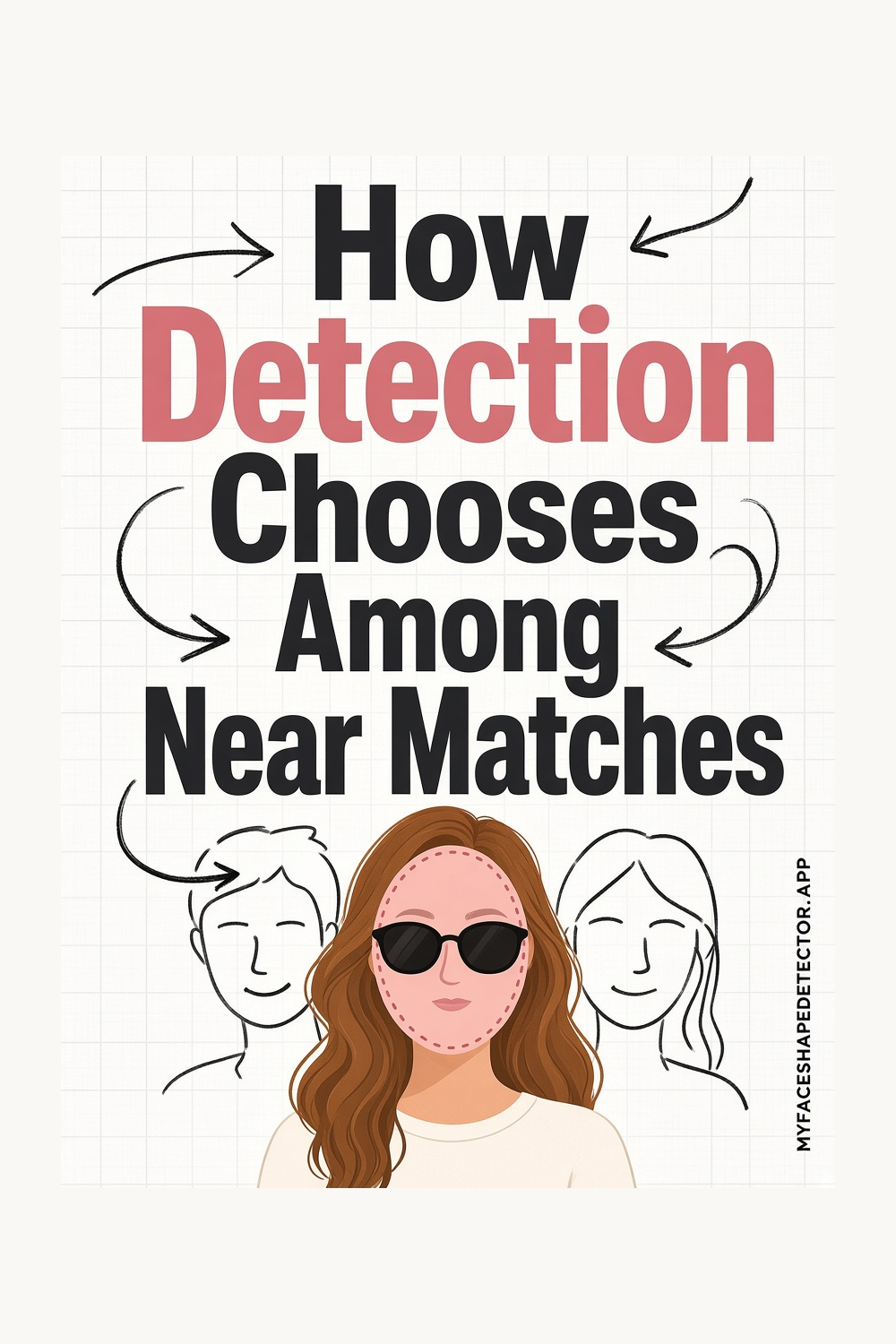
How Detection Chooses Among Near Matches
How Detection Chooses Among Near Matches starts with the outer line of the face, not with one feature in the middle of it. Detection chooses a near match by which outline agrees with more of the four measurements.
The app compares those same widths on a straight selfie. It returns the closest of the seven outlines. The picture above is the pin for this guide. The same page is the link on the pins that belong with it.
Find Your Face Shape in Seconds
Not sure if your face is oval, round, square, heart, diamond, oblong, or triangle? Upload or take a clear front-facing selfie and MyFaceShape will analyze your facial proportions to help identify your face shape in seconds.
Simple face-shape analysis — not a beauty score or attractiveness rating.
Try MyFaceShape on iPhone or Android


How to read the outline
If you searched for “near matches”, stay with the contour. Name the shape only after you can see where the face is long and where it is wide.
A tie on one line can lose on the others. Estimate means the shape is the best read of this photo, not a permanent label.
A clearer photo can move a close call. A phone can place the outline so you do not draw it.
You still supply a straight-on photo. You do not draw the forehead, cheek, jaw, or length lines.
When two names both seem possible
The scan estimates them from landmarks. Every scan repeats four checks: length, forehead width, cheek width, and jaw width.
The shape is the outline those checks support. After the scan, look at the shape it selected before the smaller lines.
The name is the result. The lines explain it.
The same face can sit near two shapes when its proportions land between them. The scan still picks one and keeps the other as a near miss.
A profile hides half the widths, so it cannot name the outline. A front selfie shows both sides.
AI turns landmarks into distances, the distances into three widths and a length, and those into the closest shape. That is the turn.
A selfie can be read as proportions: how the three widths compare, and how length compares with them. The shape name is that reading.
A shadow on one cheek moves where the width appears to sit. Even light keeps the outline honest. Use one still photo. A chin that drops or lifts between shots will not agree with itself about the jaw.
Take the photo straight
Use one photo, taken straight on, with the camera at eye level. Hair only needs to be clear of the hairline and the jaw. A tilt, a shadow on one cheek, or a chin that is lifted will change the outline before you have even started.
Look at the forehead, the cheeks, and the jaw as three widths. Then compare the length of the face with the width. That is the whole reading.
Common questions
How do I use “How Detection Chooses Among Near Matches”?
Detection chooses a near match by which outline agrees with more of the four measurements. Use one still photo. A chin that drops or lifts between shots will not agree with itself about the jaw.
How do I use “The Four Checks a Scan Repeats”?
Every scan repeats four checks: length, forehead width, cheek width, and jaw width. If two outlines both seem close, look again at the chin and the jaw corners. That is usually where they split.
How do I use “Your Selfie, Read as Proportions”?
A selfie can be read as proportions: how the three widths compare, and how length compares with them. Check length against width before you compare two names. A strong jaw can still sit on a long face.
Find Your Face Shape
Take one clear, front-facing selfie and MyFaceShape helps identify whether your face is oval, round, square, heart, diamond, oblong, or triangle. Quick, simple, and focused on face shape — not beauty scores.
Try MyFaceShape on iPhone or Android